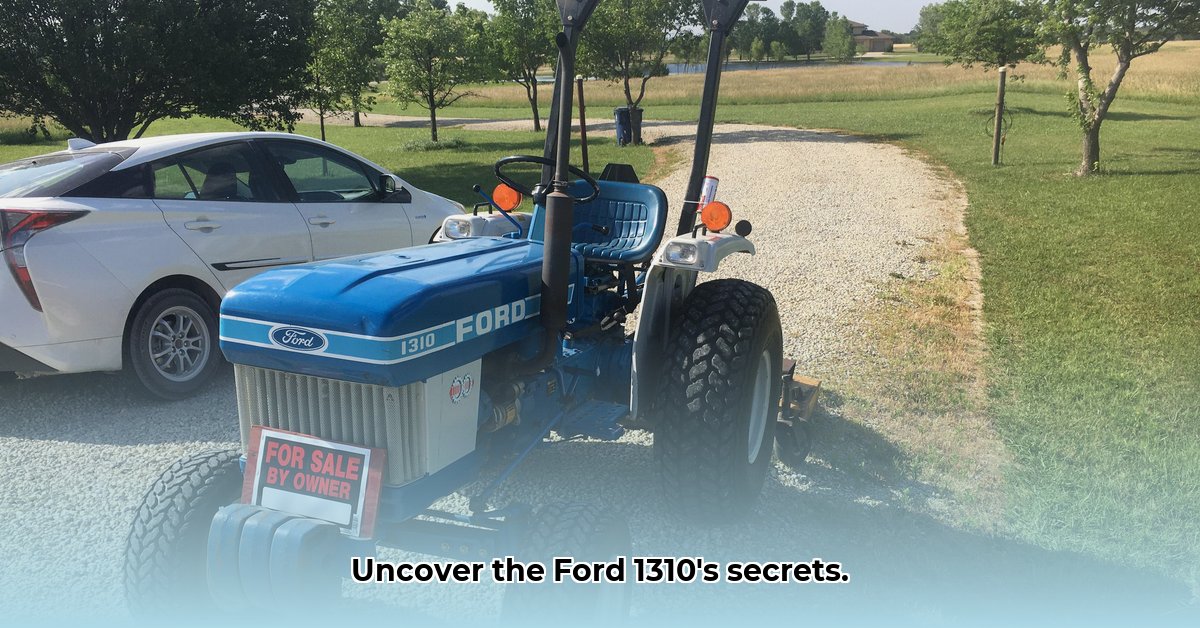
Ford Tractor 1310: A Blast from the Past, Ready for the Future
The Ford 1310 tractor, a compact powerhouse built by Shibaura for Ford from 1983 to 1986, isn't your grandfather's behemoth. Its 19-horsepower engine and 12-speed transmission (the extent of its synchronization is debated amongst enthusiasts) made it surprisingly efficient for its time. Instead of brute force, it offered clever efficiency, perfect for smaller farms or specialized tasks. Its compact size is a major advantage, allowing access to tight spaces larger tractors can't reach. This versatility extends to its capability with various attachments—mowers, snow blowers, front-end loaders, even a backhoe—making it adaptable for many needs. Why is this tractor still relevant today? Its compact design and adaptability continue to make it a practical choice for smaller scale operations and hobby farmers. For more Ford tractor specs, check out this helpful resource: Ford Tractor Specs.
A Slice of Agricultural History: The Ford 1310's Story
The Ford 1310's short production run (1983-1986) reflects a significant shift in agriculture. It represents the growing trend toward smaller, more affordable mechanization options for small-scale farmers, providing an alternative to animal power or strenuous manual labor. While modest compared to larger tractors, it offered a significant leap in efficiency for smaller operations, highlighting a shift towards more accessible mechanization. Did this affordable tractor truly revolutionize small-scale farming? While it didn't replace large-scale tractors, it undeniably filled a crucial need for many small farmers.
Giving Your Ford 1310 a New Lease on Life: A Restoration Guide
Restoring a vintage tractor like the Ford 1310 is a rewarding project, though it can be challenging. It's a testament to your skills (or your willingness to learn!). Bringing a piece of agricultural history back to life is immensely satisfying. Here's a step-by-step guide:
Thorough Inspection: Begin with a complete assessment, noting any damage to the engine, transmission, hydraulics, and other components. Online resources and manuals are invaluable here.
Parts Acquisition: Finding replacement parts for a 30+ year-old tractor can be difficult. Online forums dedicated to vintage tractors, specialized parts suppliers, and salvage yards are excellent resources. Patience is a virtue in this phase.
Engine Overhaul (Consider Professional Help): Engine overhauls are complex. Unless you have significant experience, consider professional help from a vintage tractor mechanic. This is a preventative measure to avoid costly mistakes and unnecessary delays.
Mechanical Systems Checkup: Carefully examine the transmission, hydraulics, and power take-off (PTO) system. If you lack experience, professional help may be necessary for accurate diagnosis and repair.
Reassembly: Carefully reassemble the tractor using diagrams and manuals. Take your time; precision is key to ensure efficient operation.
Testing: Thoroughly test every system to ensure everything functions correctly. This is where your hard work pays off.
Weighing the Pros and Cons: Is a Ford 1310 Right for You?
Before deciding, consider the advantages and disadvantages:
| Advantages | Disadvantages |
|---|---|
| Compact size, ideal for smaller properties | Parts availability can be challenging. |
| Versatile; handles numerous attachments | Lower horsepower than modern tractors. |
| Historical significance, a collector's item | Requires mechanical skills or professional help. |
| Potentially lower fuel costs | Not ideal for large-scale farming operations. |
The Final Verdict: Ford 1310 – Is It For You?
The Ford 1310 isn't for everyone. It's a project for those passionate about classic machinery and willing to invest time and effort. But for those who appreciate history, enjoy mechanical challenges, and desire a rewarding experience, restoring and operating a Ford 1310 offers a unique connection to a simpler time in agriculture. If you value history and enjoy a practical challenge, the classic Ford 1310 might be perfect.
How to Restore a Ford 1310 Compact Tractor for Sustainable Farming
Key Takeaways:
- Prioritize essential mechanical repairs over cosmetic restoration.
- Consider the environmental impact of materials and processes.
- Explore using recycled or reclaimed parts.
- Choose eco-friendly paints and cleaning products.
- Extend your tractor's lifespan through preventative maintenance.
Assessing Your 1310: Where to Begin?
Before restoration, carefully evaluate your 1310's condition. What needs fixing? What's purely cosmetic? This assessment guides your choices, impacting both cost and environmental footprint. Prioritize essential mechanical systems: engine, transmission, hydraulics, and brakes.
Prioritizing Repairs for Sustainable Farming
A full restoration is resource-intensive. A more sustainable approach focuses on functionality and safety.
- Engine Tune-Up: A well-maintained engine is crucial. This includes cleaning, inspecting, and replacing worn parts.
- Transmission Overhaul: A smooth-shifting transmission ensures efficient operation. Repair or replace components as needed.
- Hydraulic System Check: Examine for leaks. Repairing leaks conserves fluid and prevents environmental damage.
- Brake System Inspection: Safe operation depends on reliable brakes. Thoroughly inspect and repair or replace components as necessary.
- Electrical System Review: Ensure the electrical system functions correctly to prevent future problems.
Sourcing Parts Sustainably
Prioritize finding used parts to reduce manufacturing demand. Look to online forums and local salvage yards.
Sustainable Materials: Eco-Friendly Choices
When new parts are necessary, choose manufacturers committed to sustainable sourcing and manufacturing practices. Opt for low-VOC paints.
The "Patina" Debate: Function Over Form?
Consider the environmental cost of a pristine restoration versus embracing a "patina" look.
Beyond Restoration: Preventative Maintenance
Regular maintenance—oil changes, lubrication, and inspections—significantly extends the tractor's life.
Community and Knowledge Sharing
Connect with other Ford 1310 owners for shared expertise and support.